Like Duolingo,
but for learning
dental X-rays.
Practice the calls dentists make every day: what's normal and what's not.
Try it right here — no sign-up. One radiograph, one call.
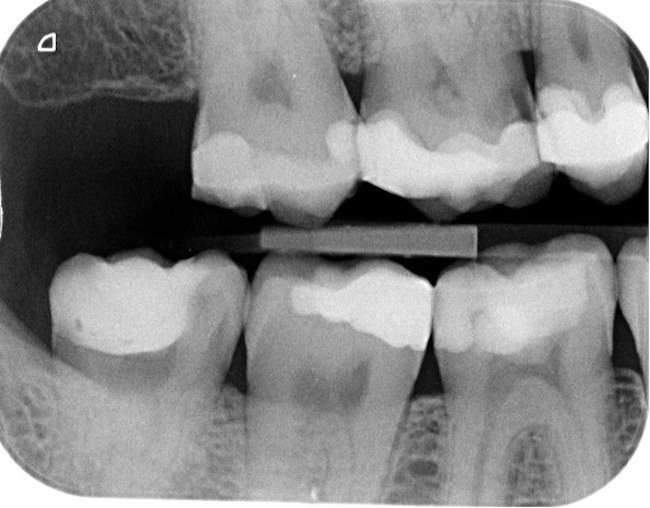
Examine the bitewing and decide which proximal surface has caries. Commit to your call, then see the outlines dentists drew and what your tap landed on.
Built by a dentist
Every finding outlined and named by dentists. Every radiograph reviewed by at least three dentists.
Real radiographs
Train on real patient X-rays.
Sessions of five radiographs
Made for study breaks.
Why it works
Dental X-ray practice that trains your eye.
Short, active reps for clinic, boards, and real patient care.
Stop calling every shadow a lesion
Cervical burnout, Mach bands, and normal anatomy all mimic decay while your eye is still training. Master the differential diagnosis of non-carious lesions, so you can confidently differentiate active caries from clinical mimics.
Read it like a dentist
Every case is a real radiograph. Its findings are outlined and named by dentists. Make your call first, then compare, and catch what you missed.
Your read
"Looks clear to me."
Expert read
Caries — distal of the molar.
Today's case is free. No account needed.
Why we built Papilla
Diagnosis is
pattern recognition.
School teaches the facts. The patterns take practice, and the misses keep happening long after graduation.
I kept seeing the same pattern: healthy findings treated like disease, and subtle lesions missed until they became serious. Diagnosis is pattern recognition — I built Papilla to help students learn the patterns before real patients pay the price.
40%
see errors weekly4 in 10 surveyed dentists say they see diagnostic errors daily or weekly.
53% of students got it right
In one study, dental students got only 53% of panoramic landmark questions right.
A line for every call
Every call comes back found, missed or over-called. An over-call names what sat under the mark.
Read real cases
Practice on real patient radiographs.
Think like a clinician
Feedback that shows what mattered, and why.
One case a day is free.
A pass opens every case. It renews until you cancel.
Pro
Launch priceEvery radiograph in the bank, each finding outlined and named by dentists.
$79 USD every 12 months
The next 50 people pay $79, and keep that price at every renewal.
Renews every 12 months · Cancel any time
Everything in Free, and:
- All 400+ radiographs, no daily limit
- Sessions planned around what you keep missing
- Your caries level, and what moves it up
- A report of what you find, miss and over-call
- Caries beside fillings, on unrestored surfaces and at its subtlest
- Your misses come back for review
- Over-called look-alikes shown again
14 days money back guarantee
Free
One real radiograph a day, outlined and named by dentists.
Free
Free forever.
Nothing to cancel · nothing expires
What you get now:
- One real radiograph a day
- A line for every call: found, missed or over-called
- Over-calls named: burnout, margin or sound tooth
- First ten cases free
What each finding looks like
Short entries on the findings you meet on a bitewing — what each one looks like, what it gets confused with, and the feature that tells them apart.

Stafne bone cavity
A Stafne bone cavity is a depression in the lingual surface of the mandible, usually holding part of the submandibular gland or fat. On a panoramic radiograph it reads as a well-defined oval radiolucency in the posterior mandible, below the mandibular canal.

Tube shift and parallax
The tube shift technique locates an object buccal or lingual to its neighbouring teeth by comparing two radiographs taken with the X-ray tube in two different positions [1, 2]. The object's image moves between them.

Nutrient canals
Nutrient canals are passages through the alveolar bone that carry vessels and nerves to the teeth and their supporting structures.

Nasopalatine canal
The nasopalatine canal, also called the incisive canal, is a bony canal through the anterior maxilla that connects the oral and nasal cavities [1].
Straight answers
Questions you're
probably asking.
What is Papilla?
Papilla is a dental X-ray practice app for dental students, dentists, and dental hygienists. You mark what you see on a real radiograph, then compare your marks with the outlines dentists drew. Every call gets a line: found, missed or over-called.
How much does it cost?
The case of the day is free, every day, with no account and no card. Full practice sessions need a pass. The yearly and the monthly pass each renew until you cancel. The next 50 people pay the launch price, $79 a year.
Who is Papilla for?
Dental students, dentists, and dental hygienists who want more reps reading dental X-rays.
Is Papilla just another AI tool?
Papilla uses real dental X-rays, with every finding outlined and named by dentists. Your marks are checked against those outlines, so every score traces back to a dentist’s call.
Is Papilla just flashcards?
Papilla trains you to read real images. You look at an X-ray, commit to a call, then see why the finding is there, absent, or easy to mistake.
Can I trust the answers?
Every finding is outlined and named by dentists. Every radiograph is reviewed by at least three dentists. Your marks are checked against those outlines.
Is Papilla good for board exam prep?
Many dental and hygiene boards include X-ray interpretation, and Papilla lets you practice that skill on real radiographs. It follows no single blueprint. It trains the underlying skill of reading dental X-rays accurately.
What will I learn first?
The basics: caries detection, normal anatomy, enamel, dentin, pulp, bone levels, and common mimics like cervical burnout.
How long does a session take?
A few minutes. A session is five radiographs. It fits between lectures, clinics, or study blocks.
Read your next dental X-ray with less doubt.
Start with one real case, compare your marks with the outlines dentists drew, and read the line each call gets.
Today's case is free. No account needed.